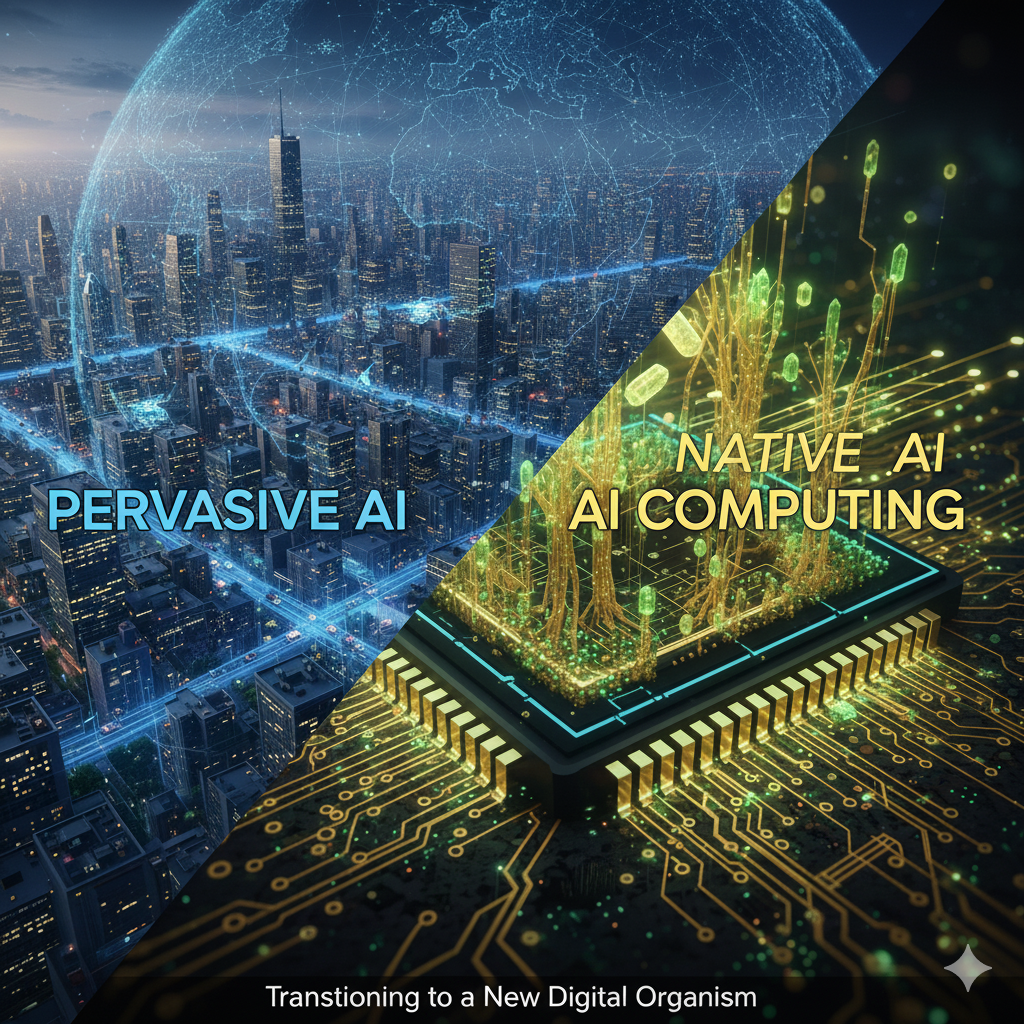
As we stand at the cusp of a technological revolution, pervasive AI is set to transform the landscape of computing. The integration of AI into every facet of life is not just a possibility but an impending reality. This transition to native AI computing—a system that is designed to operate efficiently within specific environments—is reshaping industries, enhancing human-computer interaction, and challenging traditional paradigms of privacy and security. This article delves into the strategic insights surrounding this transition, focusing on the integration with IoT and edge computing, security and ethical challenges, context-aware systems, scalability, and the transformative impact on human-computer interaction.
Integration and Synergy of AI with IoT and Edge Computing
The synergy between AI, IoT, and edge computing forms the backbone of pervasive AI systems. The integration of AI with IoT devices significantly enhances their functionality, enabling more intelligent and responsive systems. Edge computing, on the other hand, addresses critical latency and privacy concerns by processing data closer to its source rather than relying solely on centralized cloud servers.
This integration is pivotal for real-time data processing and seamless operation of AI systems, particularly in data-intensive applications such as smart cities and healthcare. For instance, in healthcare, IoT devices equipped with AI can monitor patient vitals in real-time, while edge computing ensures that sensitive data is processed locally, reducing the risk of data breaches and ensuring compliance with privacy regulations.
The implications are profound: more responsive AI applications that are not only faster but also more secure. This integration enables the creation of smart environments that can adapt to the needs of their users, offering a personalized and efficient service.
Security and Ethical Challenges in Pervasive AI
As AI systems become increasingly embedded in our daily lives, the importance of addressing security and ethical challenges cannot be overstated. The potential for data breaches and adversarial attacks is a significant concern, necessitating the implementation of robust security measures such as encryption and anomaly detection.
Moreover, the ethical considerations surrounding AI deployment—such as issues of privacy, consent, and bias—demand the development of comprehensive guidelines and regulatory frameworks. Ensuring responsible AI deployment is crucial for maintaining public trust and safeguarding user rights.
These challenges highlight the need for a multi-faceted approach to AI security and ethics, one that involves not only technological solutions but also policy and regulatory measures. As AI continues to pervade various sectors, addressing these challenges will be essential to preventing potential misuse and ensuring that AI systems are developed and deployed responsibly.
Context-Aware and Native AI Systems
The move towards context-aware and native AI systems marks a significant shift in how AI is designed and implemented. These systems are tailored to operate within specific environments, offering enhanced performance and relevance.
By adapting AI functionalities to specific applications, such as smart homes and autonomous vehicles, context-aware systems can deliver more efficient and effective solutions. For instance, an AI system in a smart home can learn the habits of its inhabitants and adjust lighting and temperature accordingly, while an autonomous vehicle can adapt its driving style based on road conditions and traffic patterns.
This shift towards native AI systems has the potential to transform industries by increasing automation and personalization. By leveraging the context in which they operate, these systems can deliver more targeted and user-centric services, thereby enhancing the overall user experience.
Scalability and Performance Optimization
As AI systems become more pervasive, ensuring their scalability and performance is critical. Optimization techniques for native AI systems leverage cloud computing and distributed systems to enhance computational efficiency and resource management.
The convergence of cloud and native AI computing offers a flexible and powerful infrastructure for the deployment and scaling of AI applications. By utilizing the vast computational resources of the cloud, AI systems can efficiently handle large volumes of data and complex computations, while native computing ensures that these systems are optimized for specific tasks and environments.
This synergy is crucial for the widespread adoption of AI technologies, enabling them to meet growing demands and complex challenges. As AI continues to evolve, ensuring that these systems can scale effectively will be key to unlocking their full potential.
Transformative Impact on Human-Computer Interaction
Pervasive AI is fundamentally reshaping human-computer interaction by introducing new paradigms such as voice and gesture recognition. These technologies enhance user experience and accessibility, making interactions more intuitive and inclusive.
The ability of AI systems to understand and respond to natural human inputs—such as speech and gestures—opens up new possibilities for interaction. This not only makes technology more accessible to a broader range of users but also fosters a greater sense of engagement and connection.
The implications are significant: by making technology more intuitive and inclusive, pervasive AI can enable diverse user groups to benefit from advancements, fostering greater inclusivity in digital environments. As AI continues to integrate into daily life, its impact on human-computer interaction will be profound, enhancing both the functionality and accessibility of digital technologies.
Conclusion
The transition to native AI computing represents a pivotal moment in the evolution of technology. By integrating AI with IoT and edge computing, addressing security and ethical challenges, developing context-aware systems, optimizing scalability and performance, and transforming human-computer interaction, pervasive AI is set to redefine the future of computing.
As we navigate this transition, it is essential to consider the broader implications of these developments and ensure that AI systems are designed and deployed responsibly. By doing so, we can harness the full potential of pervasive AI to create a more intelligent, responsive, and inclusive digital landscape.

Abhijit Daund (AD)
AD is a Senior Engineering Manager and the founder of ads2cents.com. With 13+ years of experience at companies like Walmart, he specializes in distributed systems, AI infrastructure, and software systems.