In the ever-evolving landscape of personal finance, staying informed and adaptable is crucial. The intricate interplay of financial literacy, behavioral biases, digital technologies, sustainable investing, and external factors like social media and economic conditions shape individual financial decisions. This blog post delves into these elements, offering insights and strategies to enhance your financial acumen and optimize your investment outcomes.
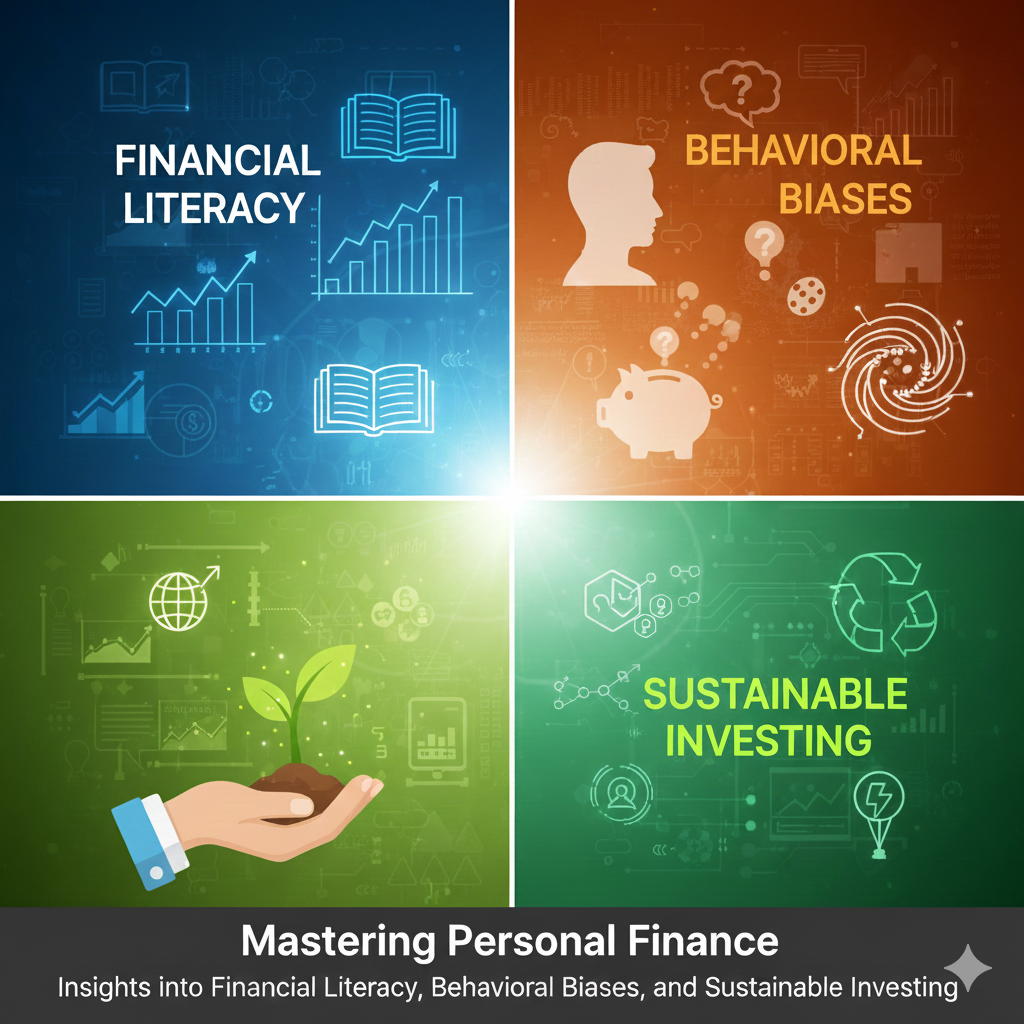
Financial Literacy and Education
Financial literacy is the cornerstone of sound personal finance management. Studies emphasize its pivotal role, particularly in emerging markets, as a catalyst for informed decision-making, economic stability, and growth. Financial literacy involves understanding fundamental concepts such as budgeting, saving, investing, and risk management. It empowers individuals to evaluate financial products, navigate economic fluctuations, and plan for long-term goals.
Targeted educational programs can bridge gaps in financial knowledge, especially important in regions where access to such resources is limited. These initiatives can range from community workshops to online courses, aiming to equip individuals with the tools needed to make prudent financial decisions. As financial literacy improves, individuals are better positioned to contribute to economic stability and growth, both personally and within their communities.
Behavioral Biases in Investment
Behavioral biases significantly influence investment decisions, often leading to suboptimal outcomes. Two prominent biases are overconfidence and loss aversion. Overconfidence can cause investors to overestimate their knowledge and predictive abilities, resulting in excessive trading and increased transaction costs. Loss aversion, on the other hand, describes the tendency to hold onto losing investments for too long, hoping to recoup losses, rather than cutting losses and reallocating resources more effectively.
Awareness and education are crucial in mitigating these biases. Investors can benefit from training on psychological factors affecting financial decisions, helping them recognize and counteract these tendencies. Behavioral finance tools and strategies can guide investors towards more rational decision-making, ultimately enhancing investment performance.
Digital and Financial Technology
The rise of digital financial platforms and fintech innovations is democratizing access to financial markets, offering individuals unprecedented opportunities to engage in investing. These technologies reduce costs and simplify the process, making investing more accessible to a broader audience. However, they also introduce risks such as increased market volatility and security concerns.
To harness the benefits of fintech while minimizing potential downsides, regulatory oversight and investor vigilance are essential. Investors should stay informed about the platforms they use, understand the associated risks, and adopt robust security measures. Regulators must ensure that these platforms operate transparently and safeguard investor interests.
Sustainable and Socially Responsible Investing
Sustainable investing is gaining traction as individuals seek to align their financial goals with environmental and social objectives. This approach considers not only financial returns but also the broader impact of investments on society and the environment. Research indicates that sustainable funds can perform as well as or better than traditional funds, offering a viable option for those seeking both financial returns and positive societal impact.
This trend reflects a shift in investor priorities towards more ethical and responsible practices. As awareness grows, sustainable investing is becoming a mainstream strategy, encouraging companies to adopt more sustainable business practices. Investors should evaluate funds based on environmental, social, and governance (ESG) criteria and consider the long-term benefits of supporting responsible enterprises.
Influence of Social Media and Economic Factors
Social media has emerged as a significant source of financial information, particularly for younger investors. While it provides access to a wealth of knowledge, the quality of advice varies, necessitating a critical approach to information consumption. Investors should verify sources and be wary of trends driven by hype rather than sound financial principles.
Economic factors, such as uncertainty and interest rate changes, also influence investment behaviors. During economic downturns, investors often become more risk-averse, altering their strategies in response to changing conditions. Understanding these influences enables individuals to make more informed decisions, adapting their strategies to maintain financial resilience.
Conclusion
Mastering personal finance requires a multifaceted approach, integrating financial literacy, awareness of behavioral biases, and savvy use of digital technologies. Sustainable investing offers a path to align personal goals with societal values, while a critical understanding of social media and economic factors ensures adaptability in a dynamic environment. By embracing these insights, individuals can enhance their financial decision-making, achieving both personal and systemic economic growth.
Disclaimer: This post is for educational purposes only and does not constitute financial advice. Read our full disclaimer here.

Abhijit Daund (AD)
AD is a Senior Engineering Manager and the founder of ads2cents.com. With 13+ years of experience at companies like Walmart, he specializes in distributed systems, AI infrastructure, and software systems.